Blog
Lock, Stock & Barrel strives to stay up to date and with the latest news and to share it with the farming community. Find out what's new in our blog, where we come together to share our latest stories.
How to Beat the Summer Heat
 Thursday, July 7, 2022
Summer is finally here in full swing, and everyone is participating in their favorite summer horse activities! With temps on the rise, do you know the signs of heat stroke in humans and horses? What are the best practices to keep yourself and your horses safe?
Heat exhaustion and heat stroke are very serious conditions that can occur quickly this time of year. Signs of heat exhaustion in humans can include excessive sweating with cool or clammy skin, accompanied by a feeling of dizziness or faintness. The affected person may feel nauseous and experience muscle cramps, especially if they are performing physical labor. If you are experiencing these symptoms, you should get out of the sun and move yourself to a cool place with air conditioning if possible. Be sure to drink plenty of water and apply cool water to your face and body until you begin to feel better.
If you begin to feel symptoms of heat exhaustion and DON’T do anything about it, it will progress to heat stroke which can be fatal. Signs of heat stroke include a throbbing headache accompanied by confusion. The affected person will have stopped sweating, their skin will be red and hot, and their body temp will be severely elevated. The person may experience nausea and may lose consciousness. In this situation the person should be moved out of the sun and into a cooler place immediately. Apply cool water to the skin and call emergency services.
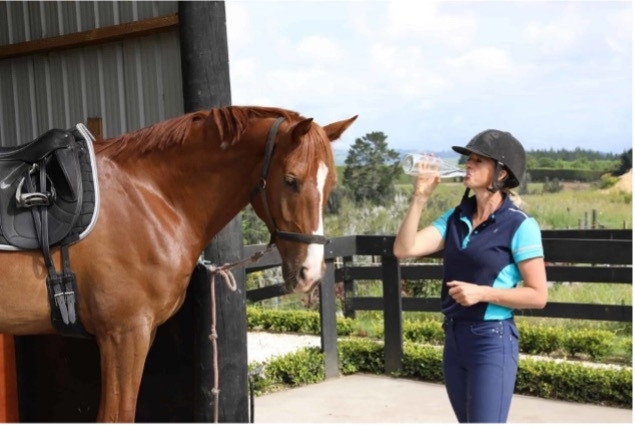
Heat stroke and heat exhaustion should be taken very seriously. When working at the barn and riding this summer, make sure you are listening to your body. Try to wear breathable clothing and sure to bring plenty of water to the barn with you. If you plan on spending an extended length of time there, make sure you have some sort of food or snacks to munch on too.
When temps rise, the health and wellbeing of your horse is at stake too. How hot is too hot to ride, and how do you know if your horse is suffering? Thermoregulation is the technical term for the naturally occurring process that our bodies and our horses’ bodies use to control and regulate their temperature. There are a lot of different biological processes that occur to help with thermoregulation, and these vary from species to species. For example, the most notable occurrence in humans is sweating while in dogs it is panting.
Horses thermoregulate first by blood flow. As the horse’s muscles move and heat up, cooler blood flows through the muscles and brings the heat to dissipate at skin level before recirculating through the muscles. The next stage of the horse’s thermoregulation is sweating. As sweat appears on the horse’s skin and begins to evaporate, the rate of cooling is increased.
There are some external factors to consider when it comes to temperature regulation in the horse, particularly the temperature and humidity of the horse’s environment. When the ambient temperature and humidity reach a certain level, the horse’s body cannot regulate their temperature as effectively. The heat index can be determined by adding the air temperature in degrees Fahrenheit to the humidity level expressed as a percentage. For example, if it is 75 degrees outside with a 60% humidity, the heat index is 135. When the heat index exceeds 170, your horse’s ability to thermoregulate has been compromised and you should be cautious of exercising. If your horse is struggling with the heat, you may notice an elevated respiratory and heart rate while at rest, along with general lethargy. When these conditions occur, you can help your horse cool down by soaking him with a cold hose and placing him in front of a fan to assist with evaporation. If its too hot to work your horse but you still want to get some barn time in, consider activities like a bath or even a swim with your horse if you have access to a pond or lake!